
Health & Wellbeing
The Biological Bottom Line: Investing in Cognitive Capital for NZ Business Growth

Every January, a familiar ritual unfolds across New Zealand. From the corporate high-rises of Auckland to the agricultural heartlands of the Waikato, the Summer Reset takes hold. We see a predictable spike in gym memberships, a surge in tramping track traffic, and a dominance of wellness in conversation.
New Zealanders treat their bodies like high-performance assets requiring an annual service, yet we often leave the driver - which is the mind - navigating a high-pressure, complex business landscape without a reliable GPS. For the business owner, HR manager, or senior executive, this is a significant commercial risk. To truly transform your organisation’s results, you must realise that mental health isn't a byproduct of a successful business. It is the very foundation of it.
1. The Commercial Case for Strategic Resilience
The start of the year is traditionally a time of high hopes, but for many employees, the return to work in late January can trigger re-entry anxiety. For a decision-maker, this period is the most strategic time to set the cultural tone for the entire year.
Why should you prioritise mental health goals now? Because the mind is the filter for every decision, negotiation, and innovation in your company. If that filter is clogged with unmanaged stress, even your most talented staff will underperform.
The Economic Reality of the Productivity Leak
The Return on Investment (ROI) for mental health is no longer a soft metric. Recent data indicates that workplace stress and poor mental health cost the New Zealand economy billions annually in lost productivity and absenteeism. With roughly 65% of the Kiwi workforce reporting symptoms of burnout in the last twelve months, the beginning of the year is a critical window to install mental infrastructure.
New Zealand research suggests that effective workplace mental health strategies provide a significant return for every dollar spent. In 2025, the Business Leaders Health and Safety Forum highlighted that the cost of workplace harm in New Zealand rose to over $5 billion. A large portion of this is attributed to psychological harm. When an employee is mentally unwell, they are often physically present but cognitively absent - a state known as presenteeism. This costs businesses in New Zealand nearly double what is lost through actual absenteeism.
Legislative Compliance as a Strategic Driver
Under the Health and Safety at Work Act 2015 (HSWA), New Zealand employers have a legal duty of care to manage risks to mental health and wellbeing just as they do physical health. This year, WorkSafe NZ has increased its focus on psychosocial hazards. These include factors like excessive workload, low job control, and poor workplace relationships. A structured EAP and mental health strategy is no longer a perk; it is a fundamental part of your workplace safety obligations and a shield against the high costs of staff turnover and potential litigation.
2. The Integrated Synergy of Mind and Body
A common misconception in the New Zealand workplace is that mental and physical health are separate silos. This is a costly mistake. They are a singular, interconnected system. A leader with high mental resilience doesn't just feel better; they possess the emotional regulation required to maintain consistency under pressure.
The Biological Connection to Your Bottom Line
When an employee manages their internal world, their physical output improves. A resilient mind leads to lower cortisol levels, which results in better sleep, higher energy, and a significant reduction in the brain fog that leads to costly workplace mistakes.
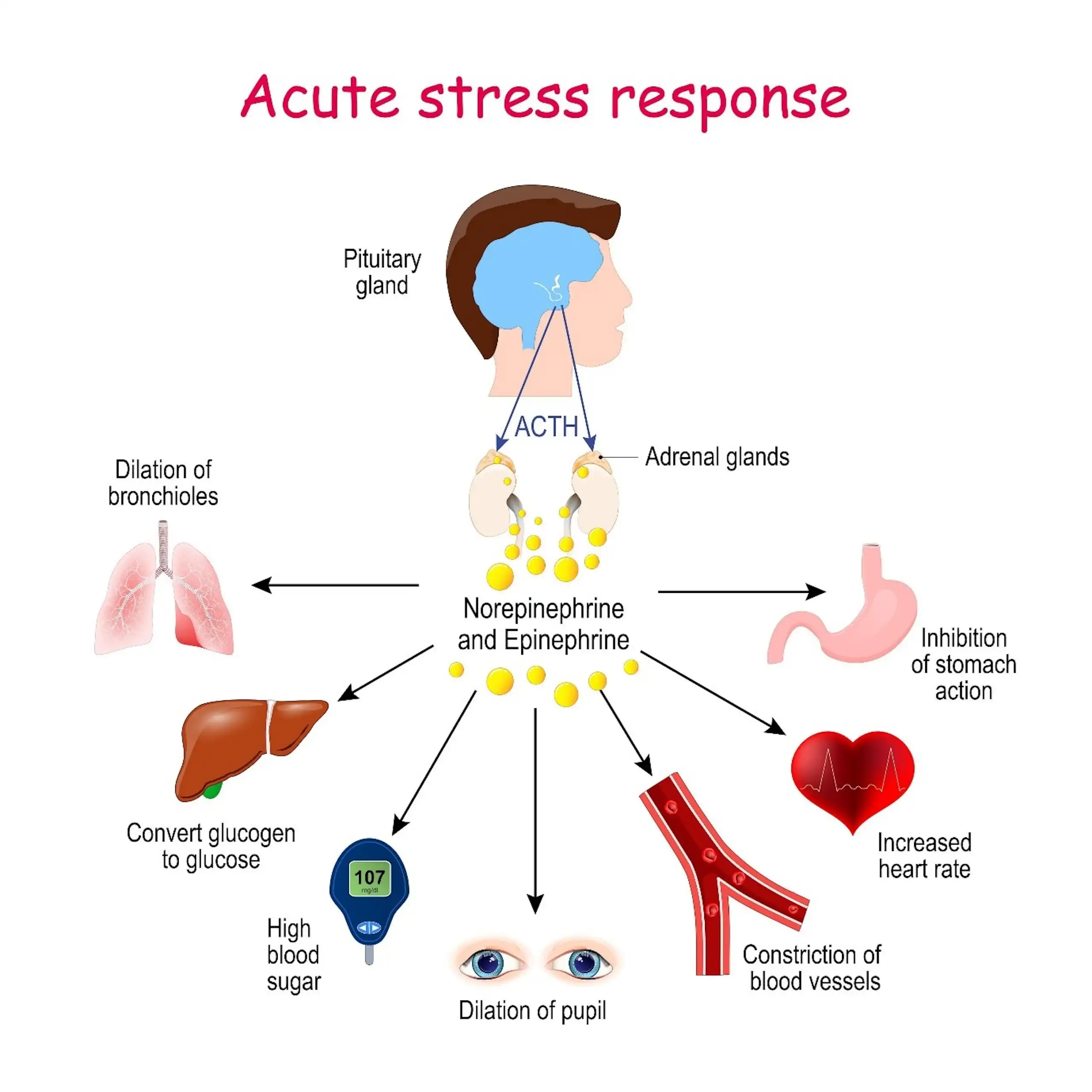
Biological Outcomes Table
This physiological feedback loop is where your internal environment meets your external results. When you shift your Mental State: you trigger a specific Professional and Physical Outcome that dictates your capacity for high level performance. The following table maps this acute response: illustrating exactly how your biology creates your business results.
- Mental State
Professional and Physical Outcome in NZ.
- High Mental Resilience
Increased motivation to maintain high-level output during crunch periods.
- Emotional Regulation
Lower cortisol levels, clearer decision making, and less workplace conflict.
- Self-Awareness
Ability to recognise fatigue early, preventing safety incidents and costly errors.
- Consistency
Faster problem-solving and a reduction in presenteeism hours.
Specific mental health goals - such as seeking professional support or understanding emotional triggers - make your business resolutions stick for the long haul because the person has the biological capacity to follow through.
3. Selective Focus and Internal Control
One of the greatest depletions of mental energy in the modern workplace comes from technostress and the attempt to fix things outside of our immediate influence. True professional growth is achieved by mastering emotional boundaries - specifically, preventing external variables from dictating internal states.
The Practice of the Mental Audit
When a team feels overwhelmed, it is usually because their focus has drifted toward the uncontrollable, such as global economic shifts, interest rate fluctuations, or legacy mistakes from the previous financial year. A vital mental health goal for your team this year is the practice of Internal Control.
Encourage your team to take a momentary audit when frustration strikes. They should ask: "Is this something I have the power to change right now?" If the answer is no, the most productive action is to pivot toward a controllable variable. This prevents the disempowerment spiral where employees feel like victims of their workload rather than masters of their output.


Reduce absenteeism by providing quality mental health support to your people
The Neurobiology of Peak Performance
In a high-stress environment, the brain’s amygdala - the emotional centre - often hijacks the prefrontal cortex, which is the seat of logic. When this happens, productivity plummets. By teaching employees how their brain responds to stress, you empower them to use Top-Down Regulation. This isn't just about feeling better; it's about maintaining the cognitive hardware required to do the job.
4. Building Infrastructure for Sustainable Change
Neuroscience shows that action precedes motivation. Waiting to feel better before starting a wellness practice is a strategy for failure. To help your staff move from wishing for a better year to achieving one, you must provide a framework that mirrors the rigour of your business KPIs using the SMART framework:
- Specific:
Instead of "reducing stress," implement a no-email window after 6:30 PM to ensure cognitive recovery.
- Measurable:
Use data-driven tools like mood trackers to identify trends in team engagement.
- Achievable:
Focus on Micro-Wins. A 10-minute recovery break between deep-work sessions is more effective than a monthly yoga class.
- Relevant:
Relevant: Align mental goals with professional KPIs, such as improving emotional regulation during high-stakes negotiations.
- Time-bound:
Time-bound: Review mental milestones during monthly 1-on-1s.
5. Actionable Strategies: The Four Mental Blueprints
To move from theory to reality, HR managers can introduce these specific Mental Blueprints to their teams:
The Boundary Blueprint
The Goal: Silence all work-related apps after 7:00 PM.
The Logic: This addresses the controllables and creates a specific boundary that protects the biological engine of the brain. It prevents cognitive bleed where work stress infects sleep quality.
The Habit Integration Blueprint
- The Goal: Engage in a creative hobby or outdoor activity for 45 minutes every weekend.
- The Logic: This promotes the release of dopamine and prevents identity burnout, where an employee feels, their entire value is tied to their output.
The Education Blueprint
The Goal: Read one chapter of a book focused on emotional intelligence or mindfulness per week.
Why it works: Psychoeducation reduces the fear of stress by explaining how the brain responds to it.
The Self-Care Blueprint
The Goal: Schedule one professional check-in session per month.
The Logic: This treats mental health with the same professional rigour as a physical check-up. It moves the conversation from reactive to proactive.
6. Reframing Failure as Feedback
The hesitation many decision-makers feel toward mental health initiatives often stems from a fear of failing. If a staff member has a bad day or a team experiences high stress during a busy period, the initiative hasn't failed. In a high-performance culture, setbacks are viewed as diagnostic feedback. They provide essential information about your organisational triggers. By shifting the objective from perfection to awareness, you remove the sting of disappointment that often leads to procrastination.
7. The Mana of the Mind: Leading Beyond the "Number 8 Wire" Mentality
In New Zealand, we take pride in our "Number 8 wire" ingenuity - the ability to fix anything and keep going regardless of the cost. However, applying this "fix and forget" mentality to your team’s mental capacity is a dangerous strategic error. Your staff are not static assets; they are a living ecosystem.
Your greatest value as a leader is your ability to protect the Mana and the cognitive energy of your people. They do not need a boss who treats them like a replaceable machine. They need a navigator who understands that peak performance requires periods of recovery and that mental clarity is a finite resource that must be actively cultivated.
By removing the weight of performative busyness and embracing Manaakitanga - showing genuine care and respect - you create a workplace where people feel safe to innovate.
Improve organisational resilience by providing quality mental health support to your people
8. The Strategic Career Pivot: From Survival to Sovereignty
The "Sovereign Employee" knows their value, and they know that their ability to think clearly is their most important career asset. Once you stop trying to force yourself to function like a high-performance hard drive, you realise that prioritising your mental health is a massive professional advantage.
In a competitive market, the ability to remain calm and decisive under pressure is the ultimate edge. When you set firm boundaries or seek professional support, you are directly reinvesting in your Cognitive Capital. This isn't about avoiding a breakdown; it is about sharpening human skills: empathy, complex problem-solving, and resilience.
9. Business Implementation: From Theory to the Frontline
Leadership and The Glass House Effect: In New Zealand’s egalitarian business culture, leaders are under constant observation. To make these goals stick, leadership must Walk the Talk.
The Squeezed Middle: Your middle managers are the frontline of resilience. This year, make training them in Mental Health First Aid a critical goal. They must spot fatigue before it becomes a WorkSafe NZ notification.
Digital Hygiene and the Switching Penalty: A strategic NZ goal for this year should be Asynchronous Communication, allowing staff to focus on deep work rather than constant interruptions.
Building Psychological Safety: This aligns with the concept of Manaakitanga. If your team doesn't feel safe to say, "I'm overwhelmed," they will hide the stress until they burn out.
10. The Workforce Landscape: Why "Now" is the Strategic Moment
The Summer Reset is a period of reflection for the Kiwi workforce. For many, it is a time to decide whether their current workplace culture adds to their life or depletes it.
Investing in the Strategic Filter
As a leader, you must recognise that your employees' minds are the filters through which your company experiences every challenge and victory. As you plan for the year ahead, consider:
The Snag Test: How do I want my team to react when a major project hits a snag?
The Monday Morning Reality: How do I want my managers to feel when they start their work week?
The Cultural Legacy: What actions can I take today to ensure our workplace is a place people enjoy living and working in?
Securing the Foundation of Your Growth
Wisdom Wellbeing is the leading Employee Assistance Program (EAP) provider in New Zealand, dedicated to helping organisations move beyond "Number 8 wire" fixes and toward sustainable professional change.
Through the Wisdom App, your team gains access to tools designed for real accountability:
- Interactive Mood Tracker:
Spot trends and identify workplace triggers.
- Mini Health Checks:
Proactive monitoring of mental and physical health.
- Expert Resource Library:
Access to webinars and podcasts to build a resilient toolkit.
Ready to move from "feeling better" to doing better? Wisdom Wellbeing offers your organisation 24/7, 365 support with instant access to qualified counsellors. Contact Wisdom Wellbeing today to integrate a high-performance EAP service into your business strategy and protect your company’s greatest asset: the collective mind of your team. Call us today at 1800 868 659 to speak to a wellbeing consultant.

Wisdom Wellbeing
Wisdom Wellbeing is one of Australia’s leading EAP providers. Specialising in topics such as mental health and wellbeing, they produce insightful articles on how employees can look after their mental health, as well as how employers and business owners can support their people and organisation. They also provide articles directly from their counsellors to offer expertise from a clinical perspective. Besides a focus on corporate wellbeing, Wisdom Wellbeing also caters to the needs of Aboriginal and Torres Strait Islanders. “Your trusted wellbeing partner”