


Industry
How Much Does an EAP Cost in Australia?

Australian business owners, CEOs, and HR leaders recognise that supporting workforce mental health is essential for operational performance yet evaluating how much an Employee Assistance Program (EAP) costs remains a primary financial consideration. This comprehensive guide provides Australian employers with an objective breakdown of EAP pricing structures, hidden financial risks, legal health obligations, and return on investment benchmarks. You will discover how different funding models operate, how to calculate total per-employee expenditure, and how implementing an accessible wellbeing framework lowers absenteeism while protecting your bottom line.
Understanding EAP Service Options and Core Features
An Employee Assistance Program is a confidential, employer-funded intervention service designed to assist staff members in identifying and resolving personal, health, or work-related challenges. Understanding how does an eap work is essential for executive teams evaluating service levels across local providers. Current Australian programs extend far beyond traditional psychological counselling to deliver comprehensive health solutions for contemporary organisations.
A standard wellbeing package typically delivers the following core services:
Confidential Short-Term Counselling: Qualified mental health professionals providing solution-focused therapy via telephone, video, or face-to-face appointments.
Crisis Intervention Lines: Immediate 24/7 access to trauma and crisis support for critical workplace incidents.
Manager Advisory Support: Clinical guidance for HR managers and people leaders navigating complex employee mental health cases.
Digital Wellbeing Tools: Mobile applications offering self-guided mental fitness modules, digital check-ins, and health tracking tools.
Family Support Extensions: Confidential counselling extended to immediate family members to resolve domestic stress impacting work performance.
For smaller operations and growing small businesses, access to immediate external support prevents line managers from becoming overwhelmed by clinical issues outside their expertise. Conversely, large businesses and broader corporate enterprises require scalable service frameworks that integrate seamlessly with existing workplace health and safety protocols.
The Direct Financial Impact of Poor Workforce Health
Calculating the true financial cost of workplace ill-health requires assessing both direct compensation expenses and indirect operational disruptions. According to research published by Safe Work Australia and the Productivity Commission Inquiry into Mental Health, unmanaged psychosocial hazards account for billions of dollars in lost productivity across Australian workplaces every year.
Direct financial expenses incurred by Australian employers include:
• Mandatory Workers Compensation Premiums: Escalating insurance premiums driven by long-term psychological injury claims.
• Direct Sick Pay and Leave Accruals: Financial outlays for unplanned personal leave and extended medical absences.
• Temporary Replacement Costs: Expenses associated with hiring contract staff or paying overtime rates to cover vacant shifts.
Indirect financial losses often exceed direct sick leave costs. Safe Work Australia data highlights that psychological claims result in a median time off work of over 35 weeks, significantly higher than physical injury claims amounting to a median of $67,400. Furthermore, national workplace studies highlight that presenteeism, where employees attend work while unwell, reduces individual productivity by up to one-third.
Additional indirect operational impacts include:
• Managerial Time Expenditure: Hours spent by supervisors conducting return-to-work meetings, managing conflict, and reallocating workloads.
• Onboarding and Training Outlays: Capital spent recruiting and training replacement personnel when stressed employees resign.
• Reduced Team Morale: Strained operational capacity leading to burnout, low engagement, and diminished output quality across remaining staff.
Addressing these financial drains requires a proactive support infrastructure, which explains why forward-thinking leadership teams prioritise early intervention strategies over reactive crisis management.
Evaluating EAP Pricing Models in Australian Workplaces
Australian EAP providers offer several distinct pricing models. Selecting the correct structure depends on your headcount, historical usage expectations, and budgeting preferences. EAP pricing models differ per provider. Therefore, it is not possible to generalise an EAP cost to expect. However, based on our own eap pricing calculator you can expect the average cost of an EAP with Wisdom Wellbeing
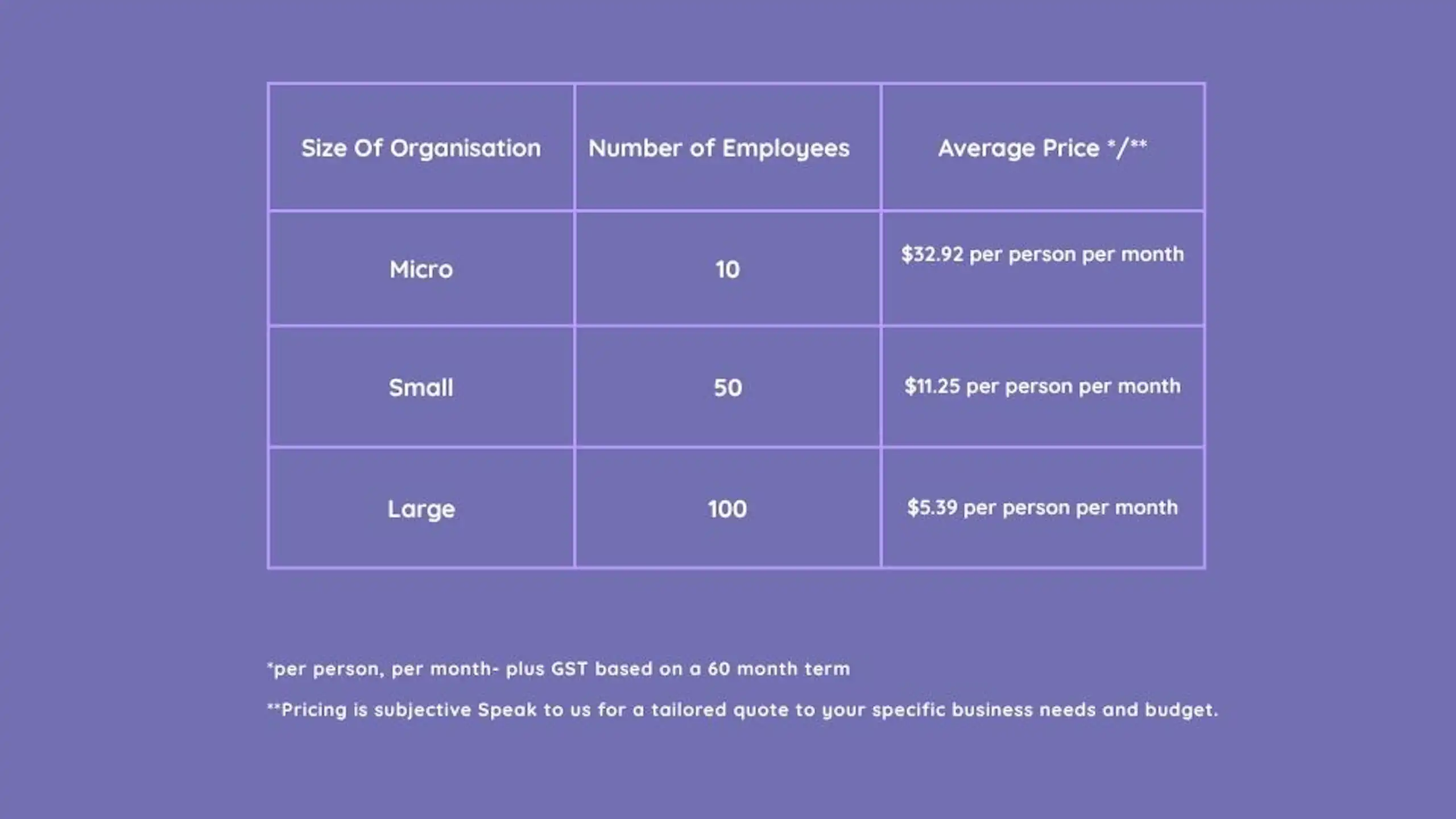
The three primary pricing models utilised in Australia include:
Fixed Per-Employee Per-Year (PEPY) Model Employers pay a flat, predictable fee per employee per year based on total headcount. This model covers all core services, including 24/7 crisis lines, digital apps, and a set allocation of counselling sessions per employee per year. This is the preferred structure for most Australian organisations because it provides absolute budget certainty and eliminates surprise invoices during high-demand periods.
Fee-For-Service (Per-Use) Model Under this structure, organisations pay a lower baseline retainer fee to maintain access to the platform, then pay an hourly fee for every counselling session utilised by staff. While this model may appear cost-effective for companies with historically low engagement, costs can skyrocket unpredictably during major workplace incidents or high-stress periods.
Per-Call or Flat Transactional Model Providers charge a flat rate for every inbound contact or referral generated through the service. This model often discourages employers from active program signposting due to fear of incurring variable fees, ultimately undermining the clinical effectiveness of the benefit.
For most employers, the Per-Employee model offers the cleanest alignment between predictable operational budgeting and unlimited, low-friction access for staff in distress.
Key Factors That Influence Your EAP Program Costs
Understanding the variables that drive program pricing enables HR directors to negotiate tailored service agreements that deliver maximum value without unnecessary add-ons.
Primary cost determinants include:
Workforce Headcount and Scale Larger organisations generally secure lower per-employee rates due to economies of scale, whereas smaller businesses pay a slightly higher rate per head to cover baseline provider administration.
Scope of Clinical Services Included Basic packages cover telephone counselling and digital resources, whereas comprehensive solutions incorporate face-to-face sessions, manager coaching, onsite critical incident responses, and health risk assessments.
Industry Risk and Psychosocial Hazard Profile High-risk industries such as construction, mining, healthcare, and logistics may require specialised clinical pathways or higher session allocations.
Session Allocation Limits Programs typically offer between 3 to 6 structured counselling sessions per employee per issue each year. Higher session thresholds increase the baseline contract price.
Inclusion of Family Members Extending confidential support pathways to immediate family members broadens the coverage pool and slightly adjusts overall plan pricing.

Calculating Commercial Value and EAP Return Investment
Evaluating an EAP strictly as an operational cost centre overlooks its significant financial returns. Australian research conducted by the Productivity Commission and independent economic evaluations show that proactive workplace mental health interventions generate substantial positive financial returns for employers.
Quantifiable commercial returns stem from three main operational areas:
Absenteeism Reduction Early clinical intervention resolves emotional distress before it escalates into extended sick leave, saving thousands of dollars per employee annually.
Presenteeism Recovery Providing staff with practical coping mechanisms restores focus, productivity, and output quality during working hours.
Workers Compensation Claim Mitigation Offering immediate confidential support reduces formal psychological injury claims, directly lowering annual WHS insurance premiums.
Employers can estimate savings by utilising our interactive ROI calculator. On average, Australian organisations realise positive financial returns for every dollar invested in a comprehensive EAP by capturing lost productivity and reducing unplanned leave. Furthermore, under Safe Work Australia's Model Code of Practice for Managing Psychosocial Hazards at Work, employers must implement secondary control measures. Providing an accessible EAP helps meet these statutory requirements while mitigating workers compensation risks.
How EAPs Minimise Wider Operational Business Expenses
The financial benefit of an integrated EAP extends far beyond managing acute mental health crises. By creating a supportive workplace culture, employers reduce secondary business expenses across multiple operational functions.
An effective program reduces secondary organisational costs in the following ways:
Lower Staff Turnover and Recruitment Costs Employees who feel supported during difficult life events are significantly more likely to remain with their employer. Retaining skilled workers avoids costly recruitment, onboarding, and lost productivity cycles.
Reduced Private Health and Benefit Claim Frictions Addressing psychological and physical health proactively prevents minor health concerns from escalating into major medical claims or prolonged disability leave.
Enhanced Organisational Reputation and Employer Brand A well-publicised wellbeing program positions the company as an employer of choice in competitive talent markets, lowering talent acquisition expenses.
Optimised Managerial Capacity Dedicated manager advisory lines provide leaders with expert clinical guidance, reducing the time supervisors spend struggling to manage complex personal situations independently.
To maximise these commercial savings, organisations must understand how to promote an eap to employees effectively. Unused programs deliver zero return, making continuous, multi-channel promotion essential for commercial success.
Selecting the Right Cost-Effective EAP Partner
Choosing a wellbeing partner requires balancing competitive pricing with clinical excellence and operational responsiveness. A low-cost provider that offers inadequate clinical access or long waiting lists will fail to deliver meaningful risk mitigation or financial return.
When evaluating potential providers in the Australian market, leadership teams should assess:
• Clinical Qualifications and Accreditation: Ensure all clinicians are fully registered with recognised professional bodies such as the Australian Counselling Association (ACA) or the Australian Psychological Society (APS).
• Accessibility and Digital Infrastructure: Verify that staff can access support through multiple channels, including immediate telephone lines, secure video consultations, and intuitive mobile applications like the Wisdom App.
• Account Management and Promotional Support: Select a partner that supplies turn-key internal marketing toolkits, digital banners, and leadership resources to drive engagement.
• De-Identified Strategic Reporting: Ensure the provider delivers comprehensive, anonymised usage reports that allow HR teams to identify emerging organisational stress trends while safeguarding individual employee privacy.
Partnering with Wisdom Wellbeing provides Australian organisations with transparent pricing, 24/7 accredited clinical support, and scalable health solutions designed to meet statutory WHS obligations and drive long-term business performance.
Speak with a workplace wellbeing specialist today
Frequently Asked Questions on EAP Pricing
How much should an EAP cost per employee in Australia? Most Australian EAP providers charge on a per-employee per-year basis, providing budget certainty. The exact rate varies based on organisation size, industry risk profile, and the scope of services included, such as 24/7 crisis lines and manager advisory lines.
What factors cause EAP prices to vary between providers? EAP pricing varies depending on the service model selected, session limits per employee, clinician qualifications, digital app availability, and whether additional services like occupational health assessments or manager training are included in the baseline fee.
Is an EAP cost-effective for small Australian businesses? Yes. Small businesses often suffer greater operational disruption from a single absent worker. An EAP provides small employers with affordable, enterprise-grade clinical support, reducing unscheduled absences and mitigating the financial risk of psychological claims.
*Why should an employer pay for an EAP if staff utilisation rates are low? * Even with modest direct session utilisation, an EAP delivers substantial ROI by mitigating severe risks, offering crisis intervention, supporting line managers, and fulfilling employer duty of care under national WHS psychosocial risk regulations.
What is the difference between per-employee and fee-for-service pricing? Per-employee pricing charges a fixed annual fee per worker for predictable budgeting and uncapped basic access. Fee-for-service charges a low baseline retainer plus hourly rates for each counselling session used, which can lead to unpredictable costs during high-demand periods.
*How does an EAP help employers comply with Australian WHS laws? * Under Australian WHS frameworks, employers must identify and control psychosocial hazards. Providing an accessible EAP serves as an established secondary control measure that protects psychological safety and demonstrates compliance with employer duty of care obligations.
Related Entities for Australian EAP Costing
Employee Assistance Program (EAP) A confidential workplace intervention service providing short-term counselling, coaching, and crisis support to workers and immediate family members.
Work Health and Safety (WHS) Psychosocial Hazards Factors in the design or management of work that increase the risk of psychological or physical harm under Australian workplace health laws.
Per-Employee Per-Year (PEPY) Pricing A fixed commercial pricing model that calculates total annual EAP investment based on workforce headcount.
Absenteeism and Presenteeism Key operational metrics representing working days lost to sickness and reduced productivity when employees attend work while unwell.
Psychological Injury Claims Formal workers compensation claims arising from work-related mental health conditions or unmanaged psychosocial risks.

Wisdom Wellbeing
Wisdom Wellbeing is one of Australia’s leading EAP providers. Specialising in topics such as mental health and wellbeing, they produce insightful articles on how employees can look after their mental health, as well as how employers and business owners can support their people and organisation. They also provide articles directly from their counsellors to offer expertise from a clinical perspective. Besides a focus on corporate wellbeing, Wisdom Wellbeing also caters to the needs of Aboriginal and Torres Strait Islanders. Your trusted wellbeing partner.
EAP support for your employees
With a Wisdom Wellbeing Employee Assistance Program (EAP), we can offer you practical advice and support when it comes to dealing with workplace stress and anxiety issues.
Our EAP service provides guidance and supports your employees with their mental health in the workplace and at home. We can help you create a safe, productive workspace that supports all.