


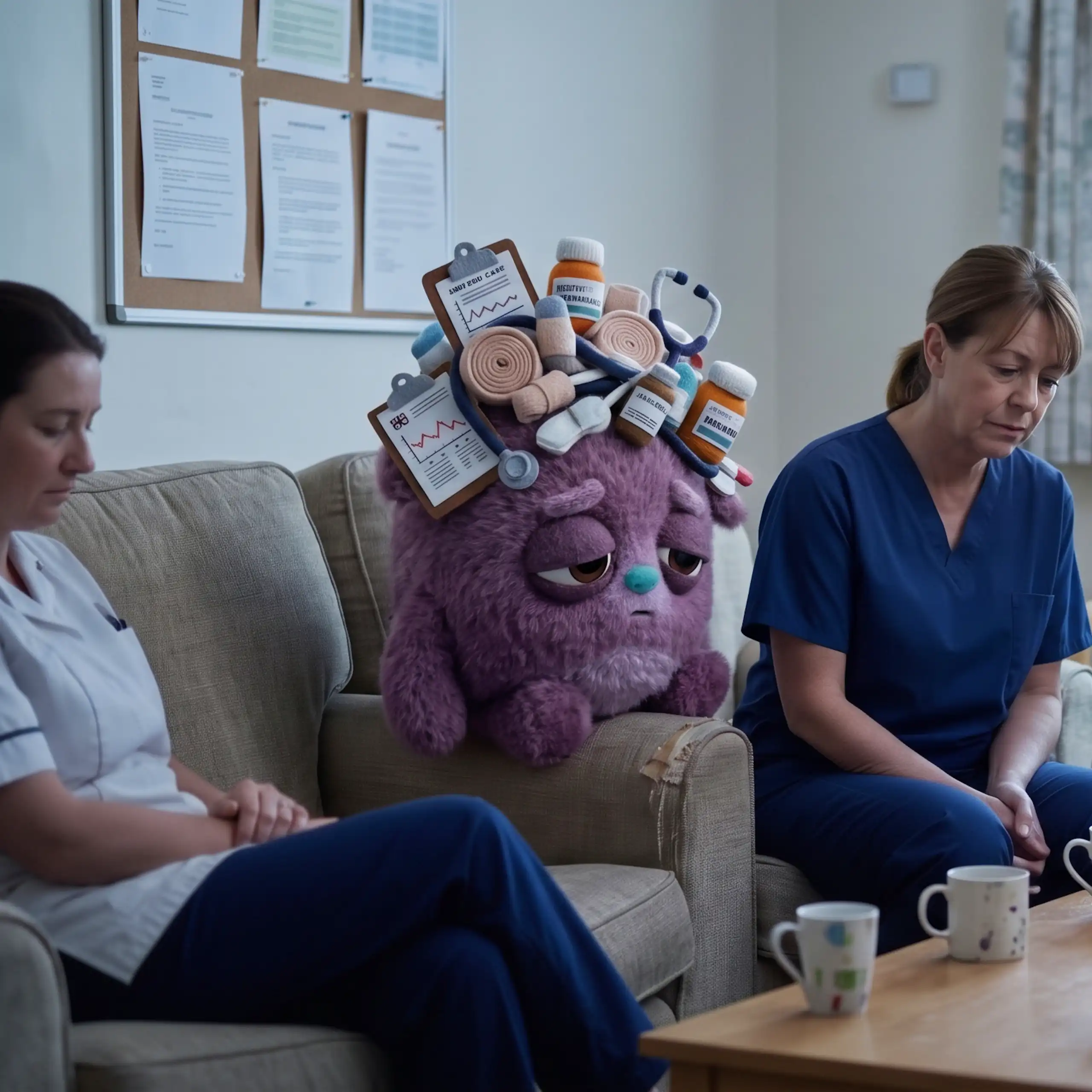
In care, the worries follow you home
- Reduce care‑sector turnover and sickness absence
- Meet CQC workforce wellbeing expectations
- 24/7 clinically governed support for care teams

Based on 1,306 reviews

Because people who care for others deserve support too.
The Wisdom Worry Monster represents all the things people working in care worry about every day.
Making sure residents are safe and well. Supporting people through difficult days. Covering extra shifts. Managing challenging situations. Caring for families as well as residents. Keeping up with training. Dealing with staffing pressures. Worrying about making mistakes. Trying to leave work at work — but still thinking about the people you care for when you get home.
One worry on its own might not seem much. But they soon pile up.
Working in care can be incredibly rewarding, but it can also be emotionally and physically demanding. When people spend their days looking after others, it’s easy to put their own wellbeing last.
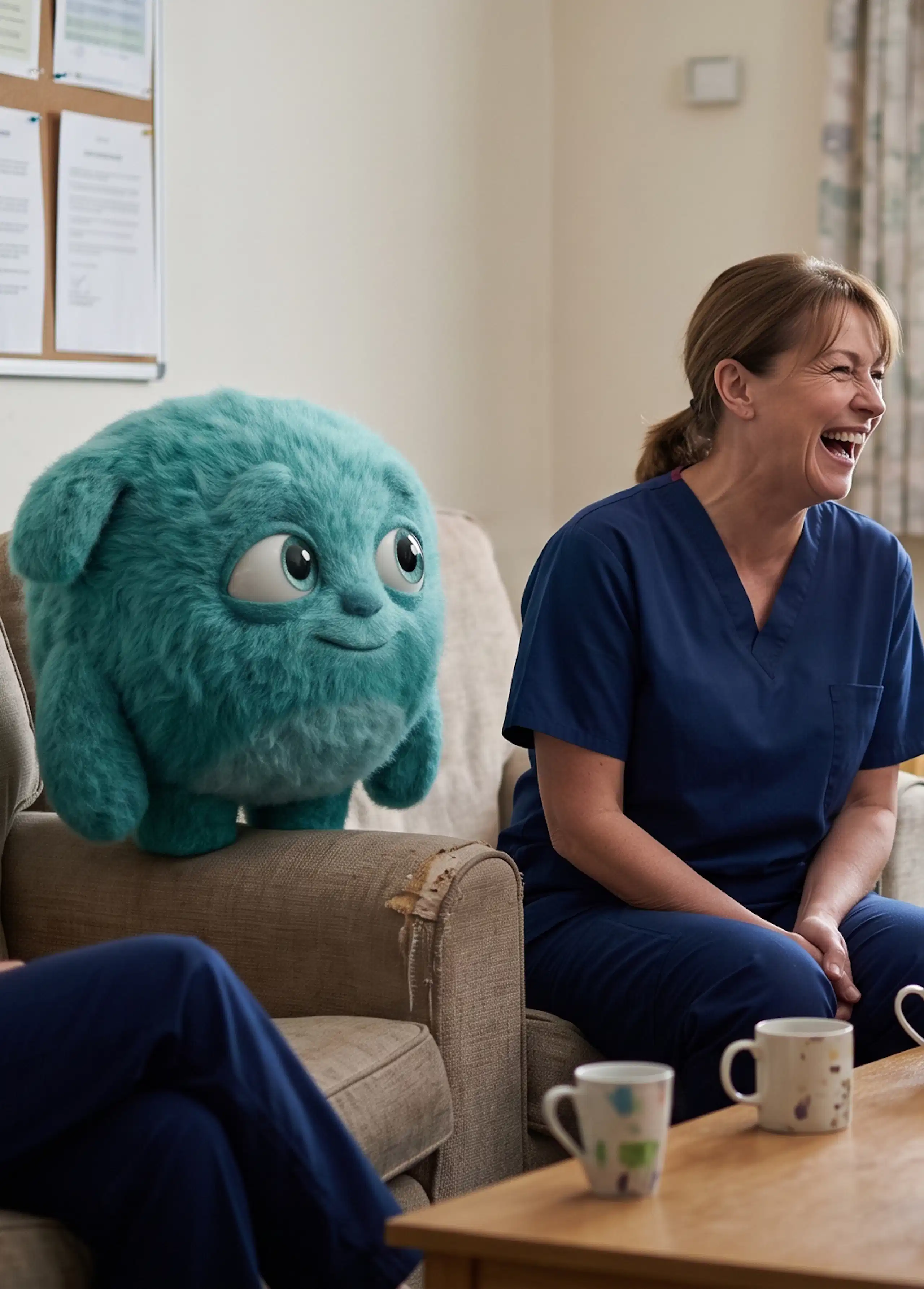
What our care-sector service can support your team with
Wisdom Wellbeing is there to help people deal with those worries before they take over. We help your team feel healthier, happier and more resilient — with everything they need in one place.
For the shift
• Emotionally demanding days and challenging situations
• Bereavement, end-of-life care and loss of residents
• Compassion fatigue and burnout
• Staffing shortages and shift cover pressure
• The fear of making mistakes when it matters most
• Training and CQC compliance pressure
For life beyond the shift
• Family and relationship challenges
• Sleep, self-care and physical health
• Anxiety and depression
• Bereavement and life events
• Financial and legal advice
• Everyday worries, big and small
54%
of all sickness absence in UK care settings is linked to mental health conditions such as stress, anxiety and burnout.
35%
first‑year turnover rate in social care, with wellbeing challenges cited as a major contributing factor.
74%
of care workers report experiencing daily stress, impacting retention, performance and continuity of care.
Our UK care sector EAP can support your staff with:
Workplace stress and burnout
Critical Incident Stress Management
Financial and legal advice
Family challenges
Anxiety and depression
Manager support line
Support guides and resources
See how you can protect your employee's mental health
Book a free demo today, and see for yourself how we provide award-winning support 24/7.
- 20 minutes on average
- Possibility to ask questions
- A no-obligation, confidential conversation
Frequently asked questions

Related Entities
- Care‑Sector WellbeingEmotional, psychological and practical support designed for care workers in high‑pressure environments.
- CQC Wellbeing ExpectationsRegulatory requirements focusing on staff support, psychological safety and proactive wellbeing measures.
- Employee Assistance Programme (EAP)Confidential counselling and wellbeing services that reduce absence and strengthen retention.
- Burnout in Social CareChronic stress caused by long shifts, emotional intensity and staffing shortages.
- Compassion FatigueEmotional exhaustion from repeated exposure to distressing or challenging care situations.
- Trauma‑Informed SupportSpecialist guidance for staff affected by traumatic or high‑impact events.
- Workplace Stress ManagementTools and interventions to reduce pressure, overwhelm and emotional strain.
- 24/7 Counselling Access